Winter School 2026: TU Dortmund at Söllerhaus with the friends of the HCI community
- News
- Announcement

Set in a snow-covered mountain landscape with clear blue skies throughout the week, the Söllerhaus offered an inspiring, focused environment. Many participants started their days with skiing before coming together for an intensive academic exchange. Being away from everyday routines allowed everyone to fully concentrate on emerging research topics without the usual distractions of office life.
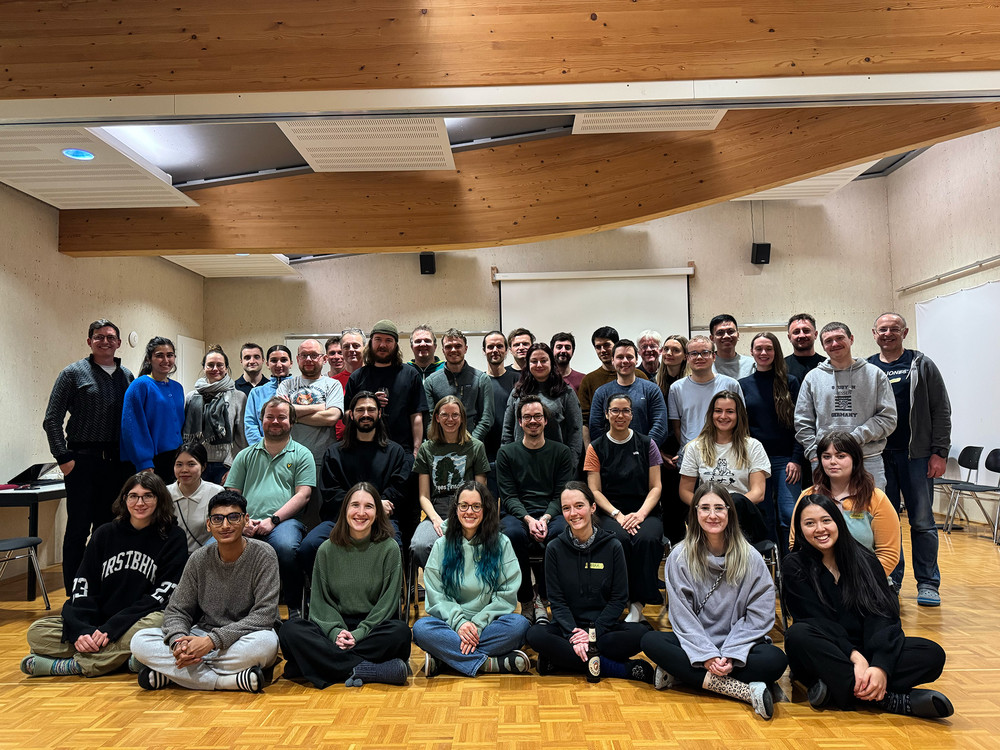
Together with around 50 participants, including PhD students, postdocs, faculty members, and selected Master’s students, the Dortmund team became part of a diverse and highly motivated group. Participants came from various universities, including the University of Oslo, Lancaster University, and HU Berlin. The mix of career stages and institutional backgrounds fostered open exchange and mutual learning. This year, the newly formed Human-AI Interaction (HAII) team from TU Dortmund joined the Winterschool, including Ankur Bhatt, Lisa Townsend, Matthias Schmidmaier, Toan Nguyen, and future PhD student Fiona Lau. For the team, this was an important opportunity to engage with the broader European research community, establish new connections, and deepen existing collaborations.
The program was structured around two thematic blocks. The first focused on applied AI in HCI research, addressing topics such as AI-supported writing, experiment design, reinforcement learning, and ethical aspects of AI content creation. The second block explored multimodal generative models for text, images, and video, as well as applications in augmented reality, conversational agents, and wellbeing technologies. A defining feature of the Winterschool was its highly interactive format. Many sessions were designed around group work, hands-on tutorials, and collaborative problem solving. This approach enabled participants to actively engage with new tools and methods rather than merely observing them.
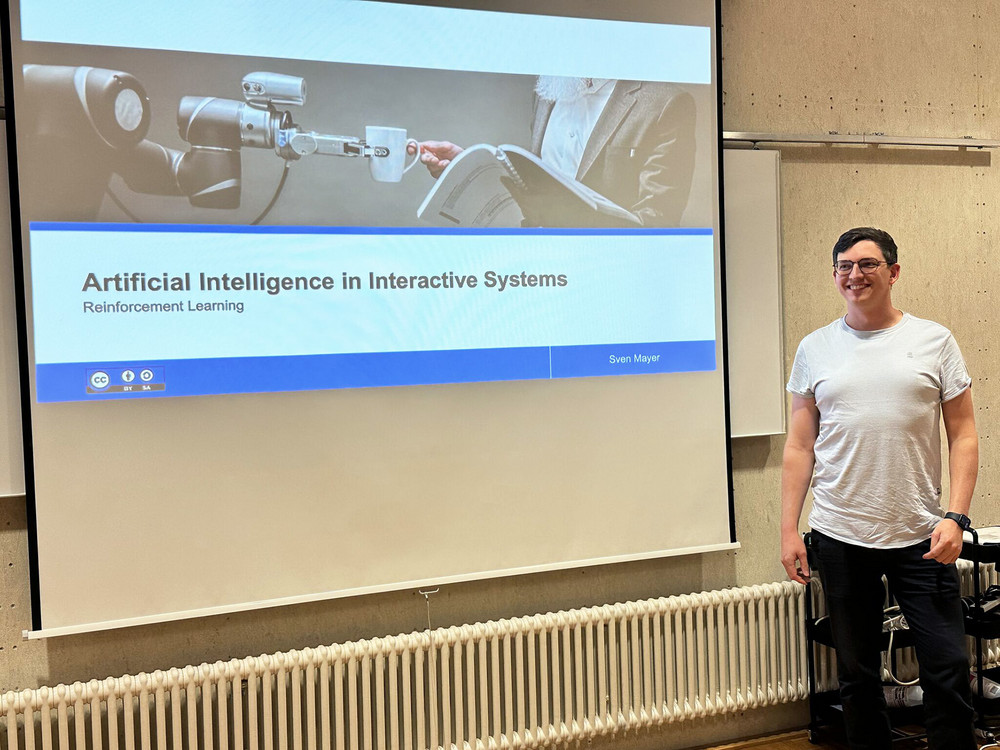
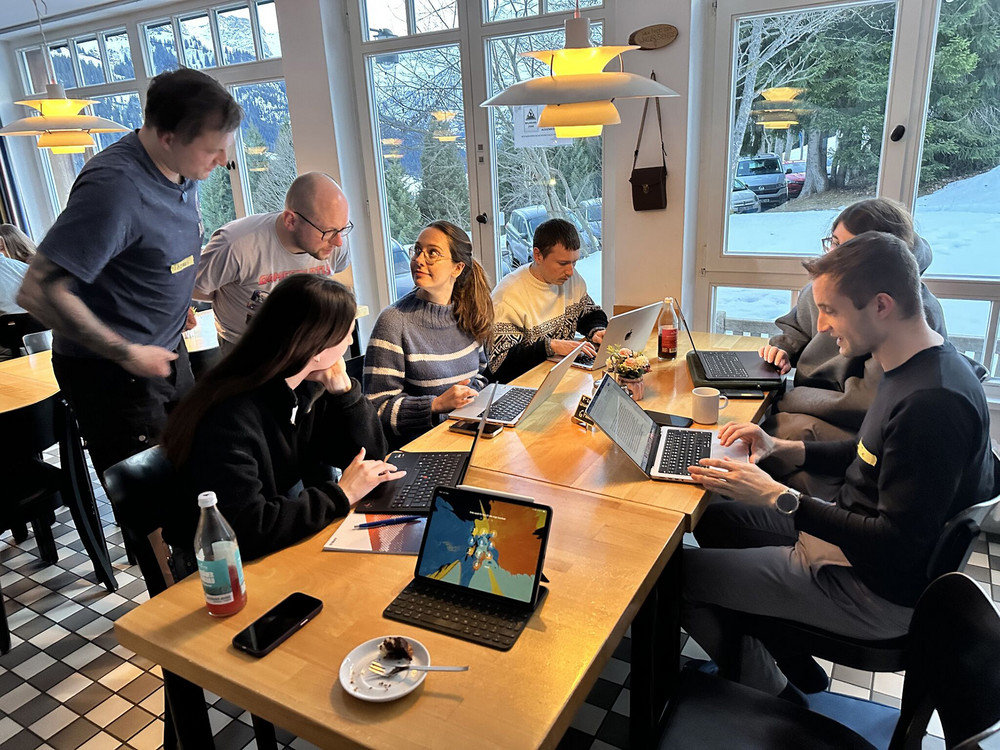
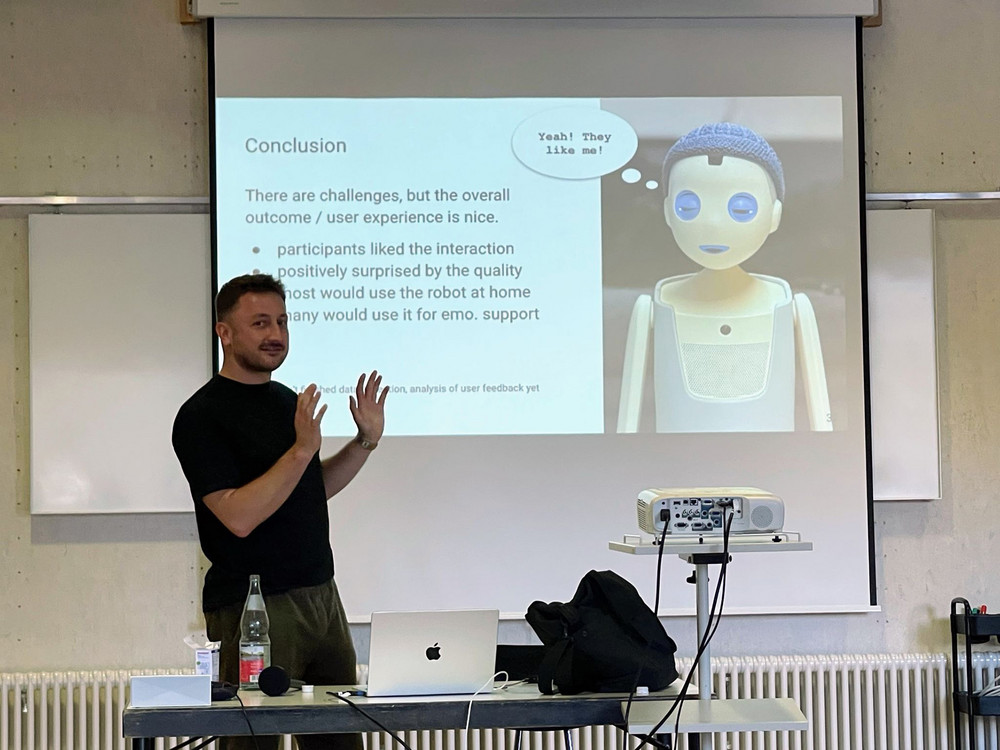
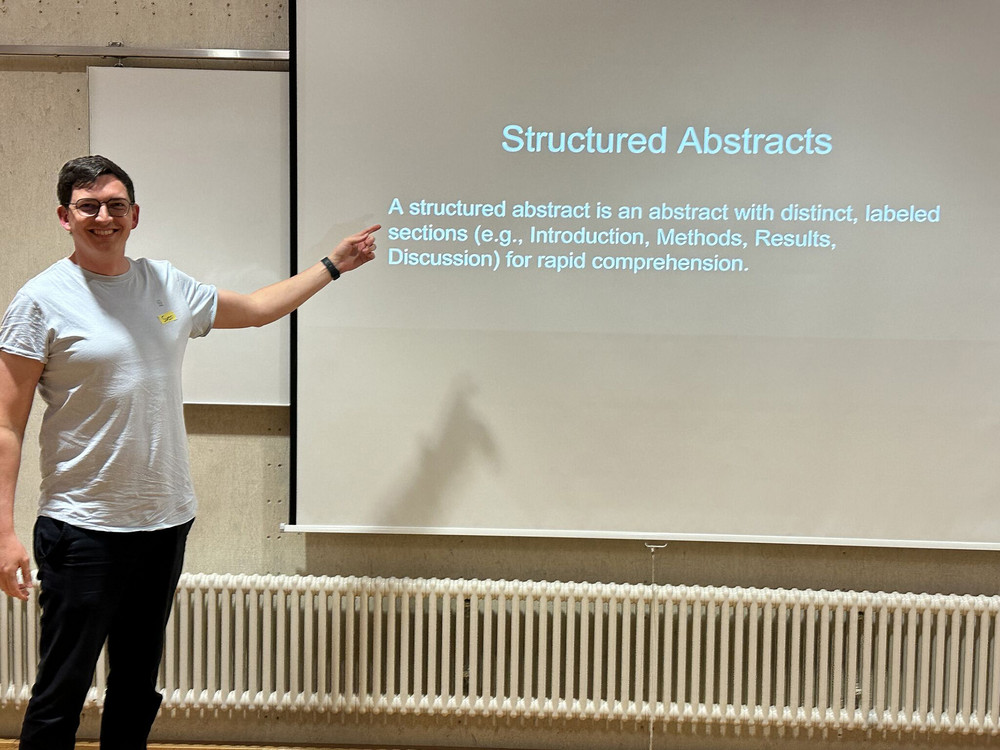
During the weekend, Prof. Albrecht Schmidt and Prof. Sven Mayer gave a hands-on session on “Writing Papers with AI support.” While the new tools are essential to understand, the basics of what even is a good abstract are equally important. As part of the program, Prof. Sven Mayer contributed an introduction to reinforcement learning, focusing on how these concepts relate to reinforcement learning from human feedback. This session helped participants better understand key mechanisms underlying modern interactive AI systems. For more information, see his lecture on Human-Centered Machine Learning. Additionally, Matthias Schmidmaier from TU Dortmund gave an introductory session on "Realtime Interaction with Intelligent Agents in User Research," where lessons learned when building and evaluating agent systems were presented.
Artificial intelligence increasingly shapes the design and evaluation of interactive systems. For HCI researchers, staying informed about new tools, methods, and limitations is therefore essential. The Winterschool offered a structured space to engage with these developments in depth. Sessions on generative models, retrieval-augmented generation, AI-enabled hardware, and qualitative data analysis with LLMs combined technical instruction with critical reflection. Participants discussed not only how to use these technologies, but also how to apply them responsibly and meaningfully in research. From the TU Dortmund perspective, this comprehensive exposure to current AI techniques was particularly valuable for aligning ongoing projects with state-of-the-art methods and for identifying new research directions.
Beyond individual learning, the Winterschool played an important role in strengthening research networks. Informal conversations during meals, evening sessions, and shared activities complemented the academic program and encouraged open exchange. Several PhD students from different universities have already initiated joint project ideas and plan to continue working together. These emerging collaborations reflect the long-term impact of the Winterschool as a platform for sustainable cooperation. But not only are projects key, but also building up a network of peers is essential, especially in the earlier phase of a PhD. For the HAII group, these connections provide a strong foundation for future joint projects, visits, and publications with partner institutions, including LMU Munich and other participating universities.